


Picturesque Illustrations of Buenos Ayres and Monte Video
London: R. Ackermann, 1820. Item #02645
The Great Color-Plate Book of Early Argentina
One of Only Fifty Atlas (Large-Paper) Copies of Ackermann's Magnificent
Buenos Ayres and Monte Video
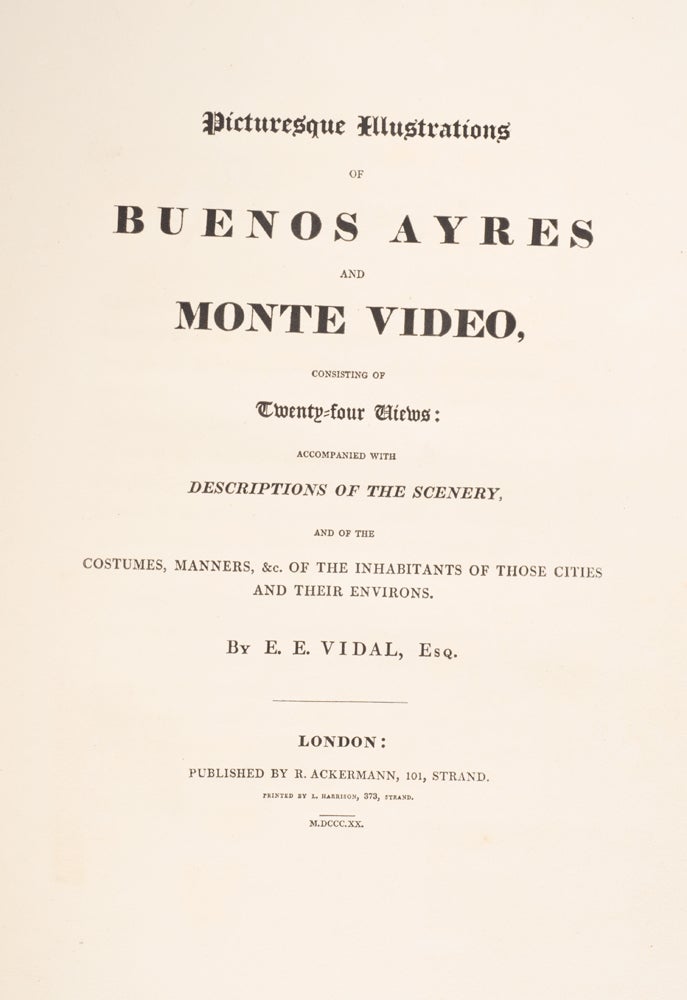
VIDAL, E[meric] E[ssex]. Picturesque Illustrations of Buenos Ayres and Monte Video, Consisting of Twenty-Four Views; accompanied with Descriptions of the Scenery, and of the Costumes, Manners, &c. of the Inhabitants of those Cities and their Environs. London: Published by R. Ackermann… Printed by L. Harrison, 1820.
First edition. One of only fifty Atlas (large-paper) copies.
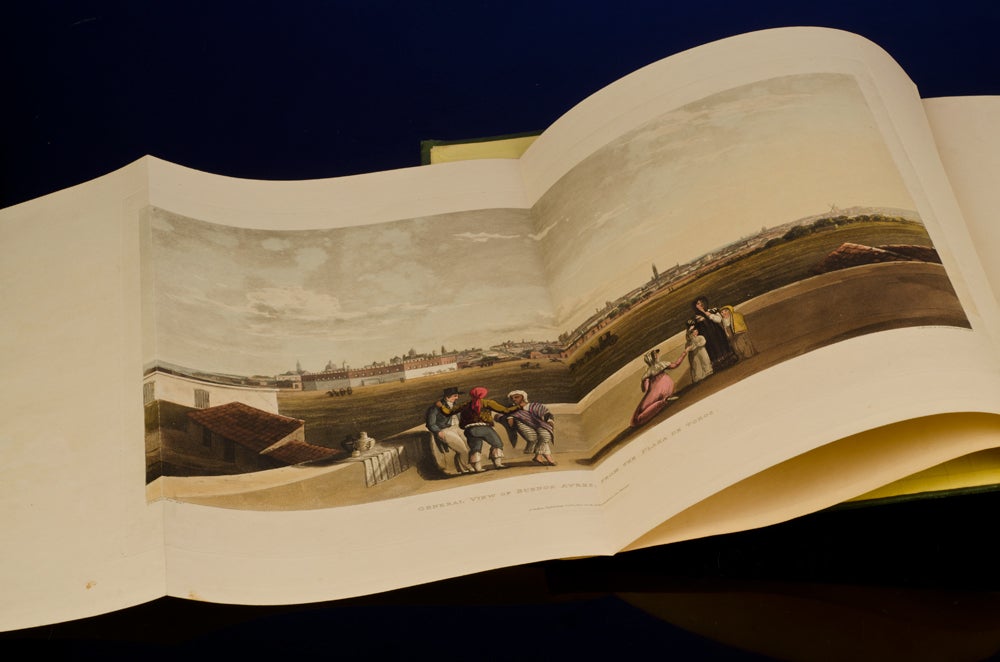
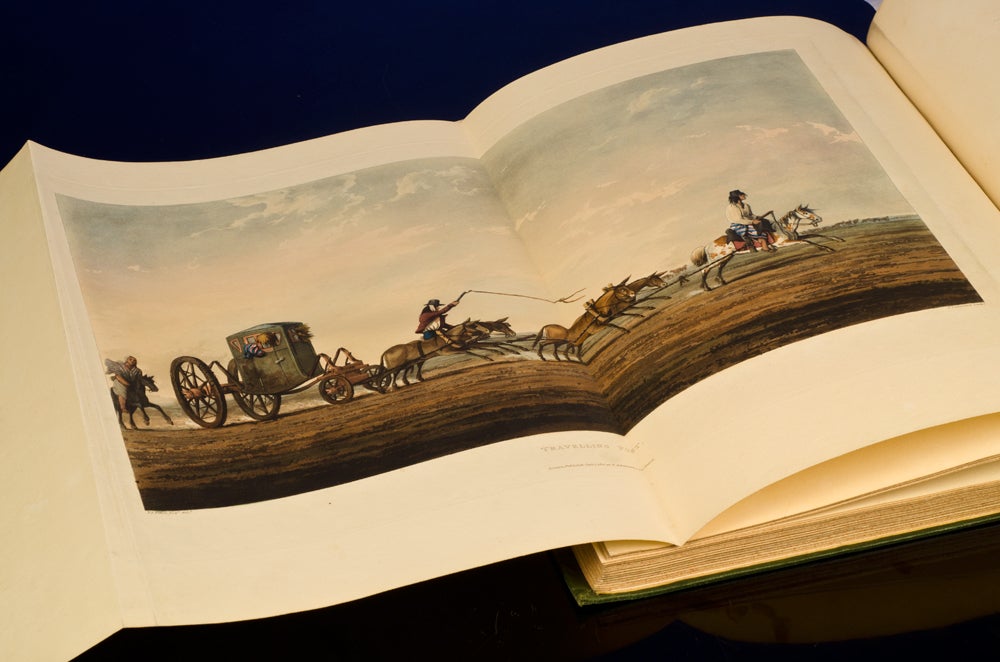
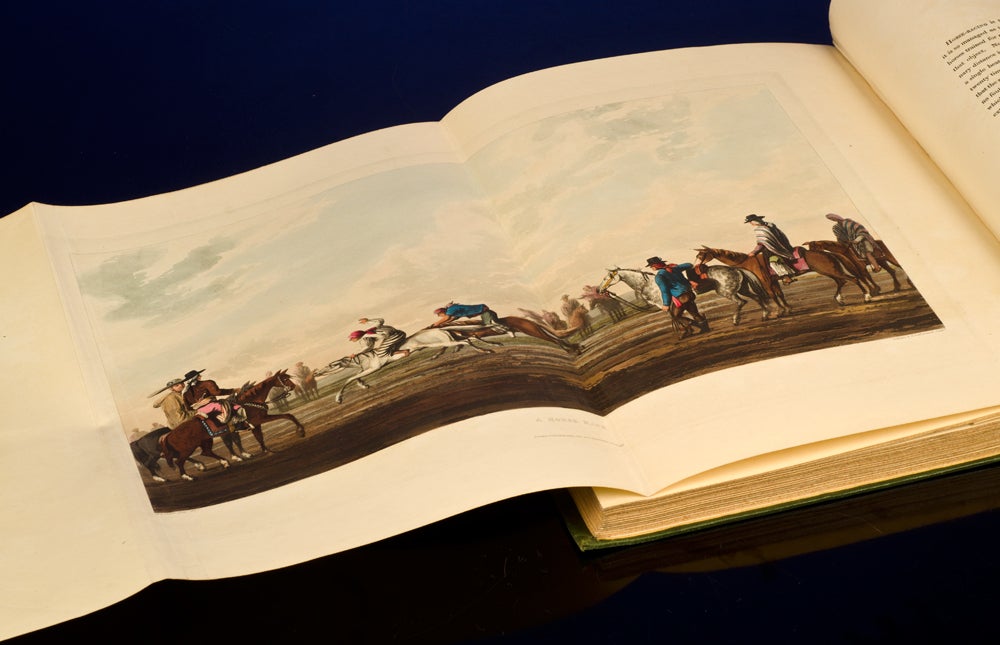
Atlas quarto (15 5/8 x 12 1/2 inches; 397 x 317 mm.). xxviii, 115, [1, blank] pp. Twenty-four magnificent hand-colored aquatint plates, including four double-page folding panoramas (one incorporating two views). Text and plates watermarked 1818 and 1820.
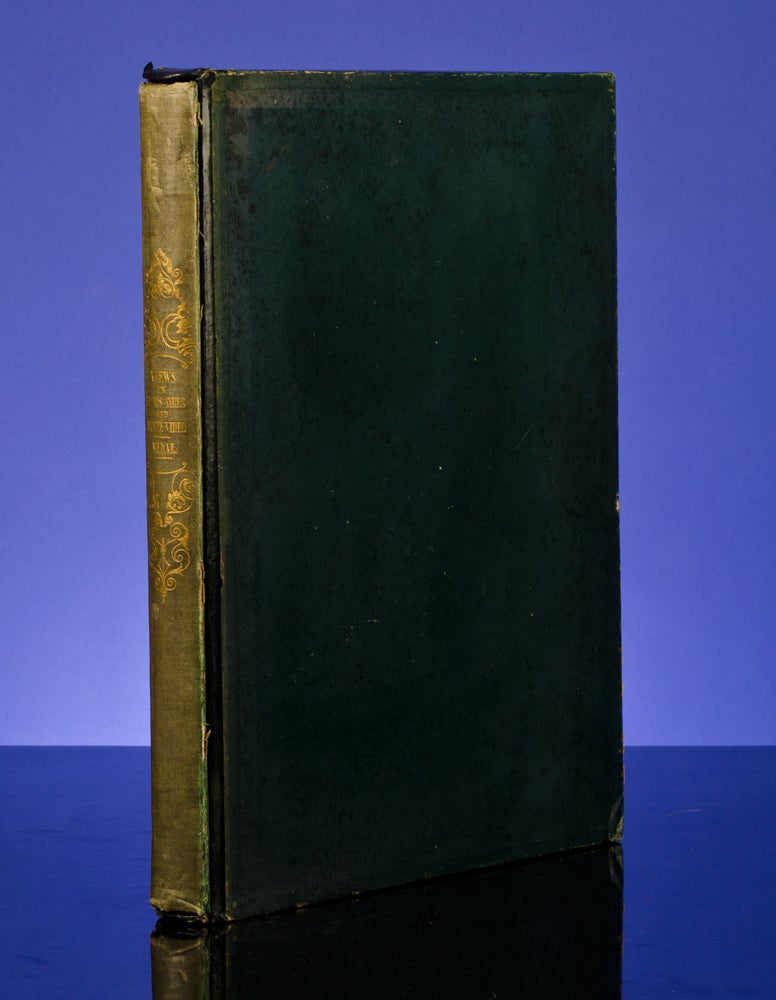
Publisher's original green morocco-grain cloth, covers elaborately blocked in blind, spine decoratively stamped and lettered in gilt, yellow coated endpapers. Very slight wear at the upper joint, inner hinges neatly strengthened. Housed in a green cloth slipcase. A beautiful, unusually fresh copy.
One of the masterpieces of nineteenth-century travel illustration, and unquestionably the most important English color-plate book devoted to the Río de la Plata during the formative years of Argentine independence. Issued by Rudolph Ackermann at the height of his publishing career, Vidal's Picturesque Illustrations combines superb aquatint engraving with brilliant contemporary hand-coloring to create one of the finest visual records of early nineteenth-century South America.
Emeric Essex Vidal served with the Royal Navy in the Río de la Plata between 1816 and 1818, only a few years after the region had broken from Spanish rule. Unlike many travel artists who relied upon second-hand sketches or romantic invention, Vidal drew directly from life, recording Buenos Aires, Montevideo, and the surrounding pampas with exceptional accuracy, sympathy, and artistic accomplishment. His views preserve an emerging nation at a pivotal historical moment, before the rapid political and economic transformation of the nineteenth century forever altered its landscape and society.
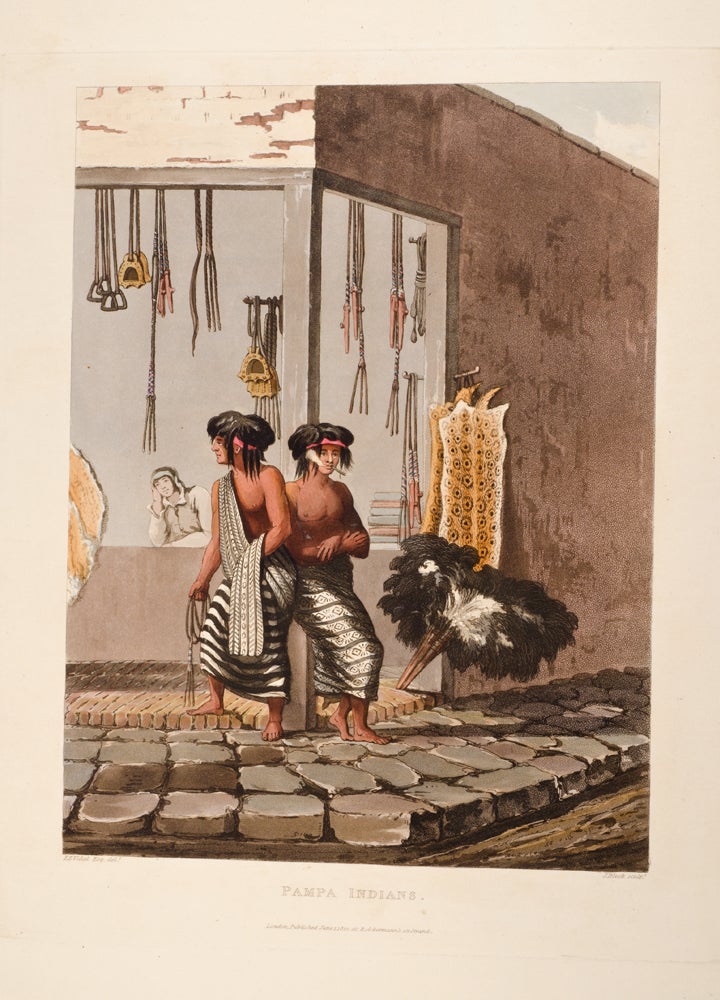
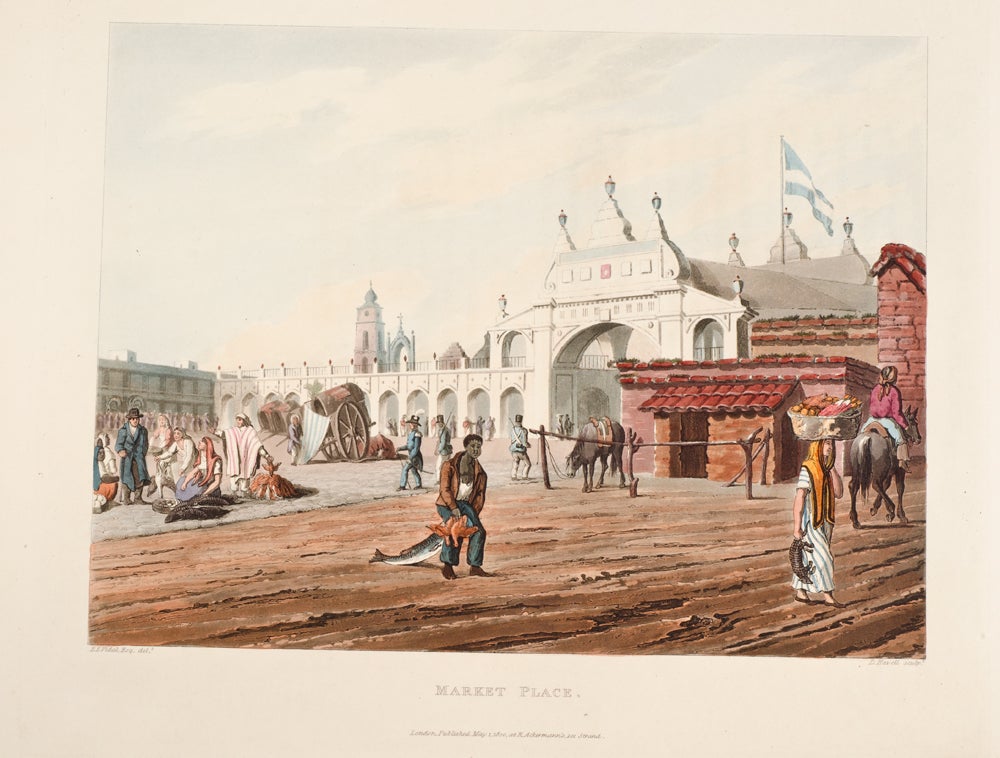
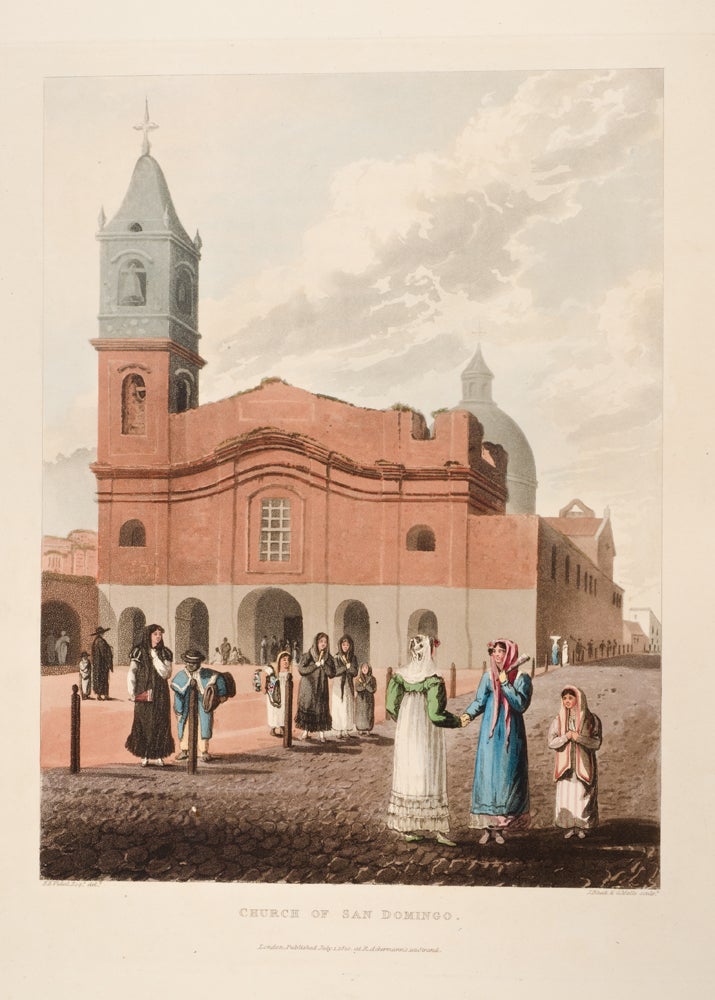
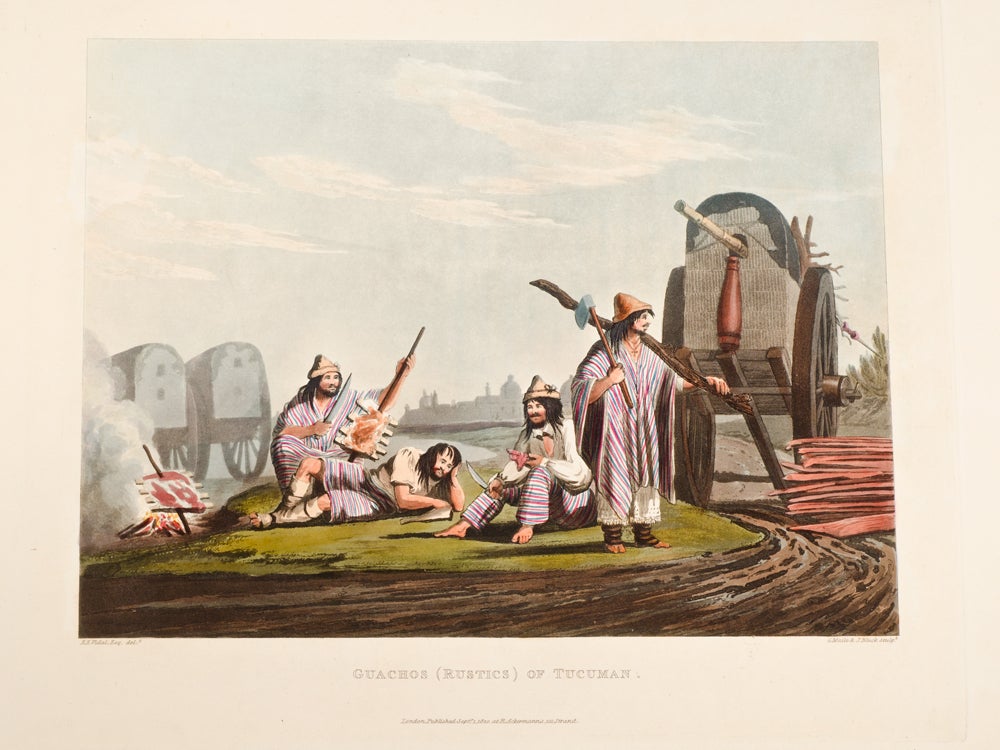
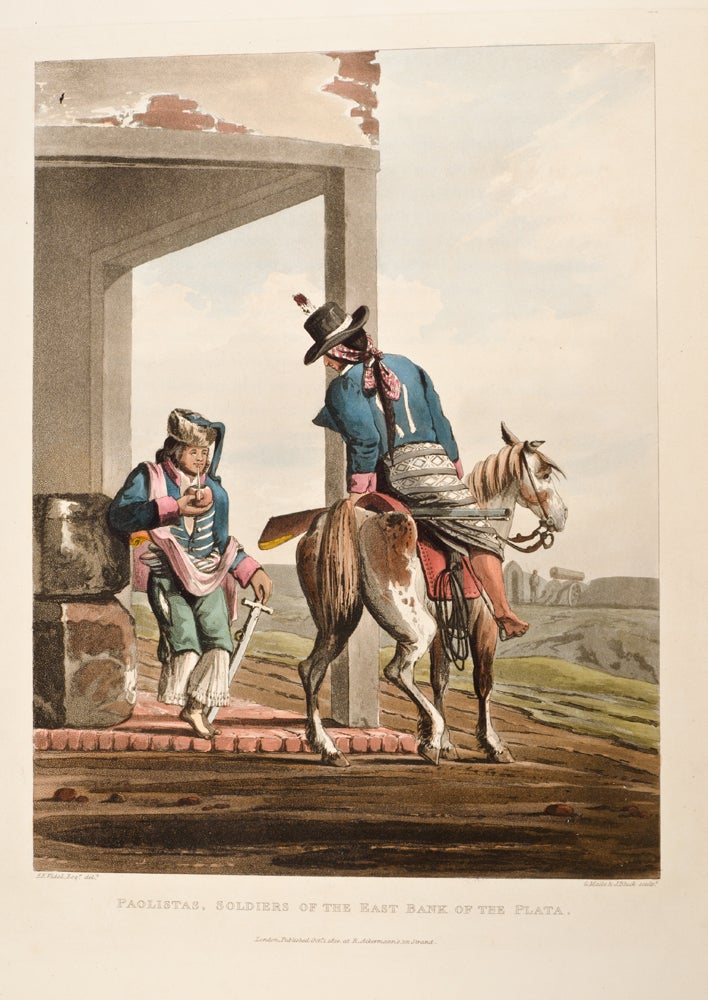
The twenty-four aquatints form an unrivaled pictorial survey of the region. Sweeping panoramas of Buenos Aires and Montevideo are complemented by intimate scenes of daily life: bustling marketplaces, churches and public squares, gauchos, estancias, soldiers, indigenous peoples, horse races, ostrich hunts, wine mule convoys, rural laborers, and the famous South Matadero. Together they constitute one of the earliest and most comprehensive ethnographic portraits of Argentina and Uruguay ever published, remarkable both for their documentary precision and for their extraordinary artistic beauty.
The present copy belongs to the Atlas issue, limited to only fifty copies, produced on substantially larger paper for the most discerning collectors and institutions. Martin Hardie records that the ordinary edition consisted of 750 copies, making the Atlas issue one of the rarest deluxe publications produced by Ackermann. The generous margins dramatically enhance the visual impact of the plates, particularly the four spectacular folding panoramas, which rank among the finest achievements of the English aquatint tradition.
The binding itself appears to represent an unrecorded publisher's variant. Abbey describes only the large-paper issue bound in red cloth, whereas the present copy retains its original green morocco-grain cloth, decorated with a slightly different spine design omitting the wording "24 Plates Coloured." Such variants are seldom encountered and add further bibliographical interest to an already exceptional copy.
Martin Hardie rightly regarded the aquatints as possessing "a subtle charm of their own apart from their historical and geographical value." That judgment has only strengthened with time. Today Vidal's work is recognized not merely as one of Ackermann's greatest travel books but as the definitive visual record of the Río de la Plata in the years immediately following independence - a cornerstone of South American iconography and one of the supreme achievements of the English color-plate book.
References: Abbey, Travel 698; Colas 3000; Hiler, p. 878; Hardie, pp. 107, 312; Prideaux, pp. 355, 375; Sabin 99460; Tooley 495.
Price: $19,500.00